

My daily routine
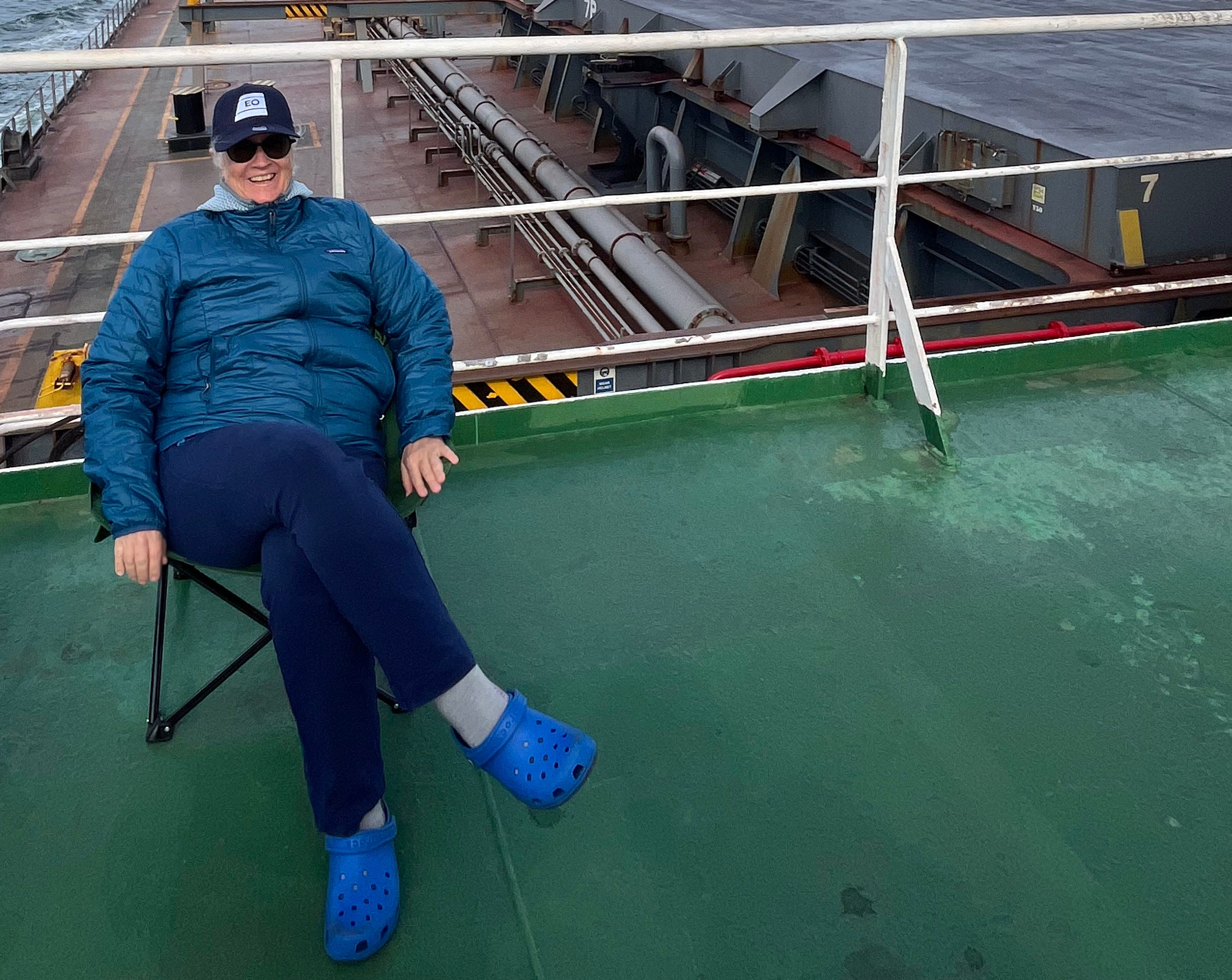
Some of you have asked me to describe a typical day on board. The problem is that there is no such thing as a typical. Weather changes, time zones shift, and schedules bend around inspections or harbour arrivals. Still, there is a rhythm to life at sea, and after more than four weeks, it has become my own.
I wake up around five or half past, without an alarm. That already feels like luxury. It reminds me of my years in Erlangen, when I worked at Siemens. I used to start work at six. Back then, it was only the shift workers and me. There is a quiet anticipation of being the first person in the office. I still like the early mornings, though I am not much for conversation at that hour. My tolerance for words increases only after tea. Until then, the silence is its own kind of company.
First thing, I write. Sometimes a blog post for Substack, sometimes a rambling piece that may never see daylight. By seven, if the weather is good and the deck is dry, I head out for a walk. I am obliged to tell the bridge when I leave and when I return, which seems perfectly sensible given the scale of the ship. It is not the kind of place you want to misplace someone.
At eight, I go to the officers’ mess for breakfast. Eggs and toast appear in different disguises, but it is always eggs and toast. I have developed a small admiration for the ingenuity with which the cook rotates these two ingredients into endless variations.
Afterward,s I often head to the bridge. Sometimes I write, sometimes I simply look out over the sea. That hour or two of doing nothing, just watching water and light shift, has become essential. I also prepare a travel log for my website, noting our position and the weather. Then I record a daily audio reflection to my family, about the various events of the day (e.g. yesterday, I spotted my first whale) and how I am feeling.
After lunch, I work for another few hours and then take a siesta. The rest of the afternoons are for reading. I am working my way through books at an alarming rate, one every two days. This would sound impressive if they were heavy classics, but they are not. The truth is, at sea, murder mysteries and thrillers become unputdownable.
When Julien visited in the vessel in Hamburg, he brought me a folding fishing chair, which now travels with me to different corners of the deck. There I sit in the wind, watch the water, and let my brain be rearranged by the weather. Occasionally, I imagine I look like a sea-hardened philosopher, though more likely I resemble someone waiting too long for a bus.
Meals divide the day with precision: breakfast at eight, lunch at twelve, dinner at six. Between these meals, time becomes strangely elastic. Sometimes an hour stretches into what feels like a morning. Other times, I blink, and it is already dinner. Evenings are for reading again. I came prepared with films and Netflix series, but they do not appeal to me. The thought of streaming drama about imaginary people, when I am surrounded by real drama involving steel, storms, and international shipping, feels redundant. A book and the sound of the sea are more than enough.
By half past nine or ten, I go to bed, ready to wake again at five. On paper, it may sound dull. In practice, it is not. The steady rhythm of the ship, the endless horizon, the small rituals of each day: these things are far from boring. They are, in their own way, quietly thrilling, though I admit the word “thrilling” may need to be taken with a pinch of salt when applied to eggs, toast, and folding chairs.
Thanks to Julien. I can imagine your reaction to the first whale haha
Thrilling indeed!