

Master Mariner: Paing Phyo
The dolphin-style captain
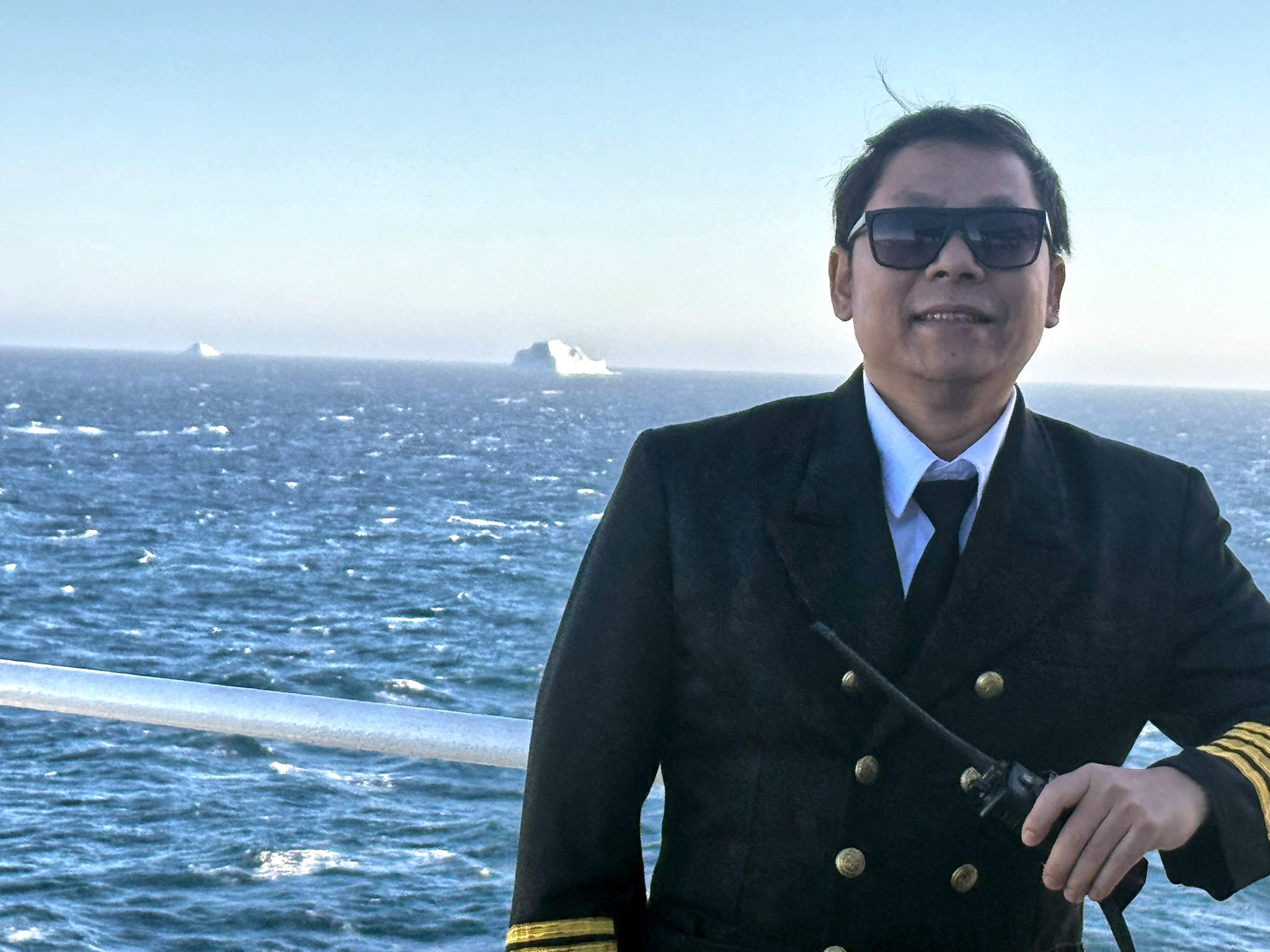
The first thing you notice about Captain Paing Phyo is not his authority but his calm attention. He listens closely, nodding as the second officer explains a detail, or smiling gently as a cadet finds the right words. His presence sets the tone. Life on board a bulk carrier is full of routine and responsibility, yet under his leadership the atmosphere is steady, respectful, and warm. He commands, yes, but he also listens, and that balance shapes life aboard his ship.
Paing grew up in Myanmar, far from the oceans he would later sail across. As a boy, he was curious about ships, but his first thought was not seafaring at all. He considered civil engineering and studied the subject with interest. The choice of a maritime career came almost unexpectedly, encouraged by family and by the opportunities available through Myanmar’s state five star shipping line.
Once accepted, he threw himself into training, learning not only the technical side of navigation and cargo but also the discipline and resilience expected of young officers. His early days were not easy. He still recalls the long hours, the absence from home, and the steep learning curve of proving himself at sea.
His climb to the captain’s chair was gradual. Each rank brought more responsibility and new pressures. As a junior officer, he stood long watches, often in difficult weather, absorbing lessons from senior officers who sometimes taught with patience and sometimes with sharp words. Later, as chief officer, he carried the weight of cargo operations, safety drills, and the welfare of the deck crew.
Promotion to captain came only after years of endurance. Paing had faced long absences from family, demanding contracts, and the tests of character that come with being accountable for a vessel’s safety. Trust was slow to build, both from superiors and from the men and women he worked alongside. It was earned voyage by voyage, until at last he was handed the command he carries today.
When asked to describe his leadership, Paing draws a simple distinction. There are, he says, tiger-style captains and dolphin-style captains. The tiger rules with authority, sharp discipline, and a sense of distance from the crew. The dolphin leads differently, swimming with the group, guiding, but also attentive to the needs of others. Paing has seen both styles and has chosen the latter. Authority is necessary, but respect and cooperation keep a ship truly running.
The work itself is demanding. The Chief Engineer and Chief Officer keep him constantly updated. He reviews paperwork, sends reports to operations, tracks weather and port schedules, and signs off on safety measures. On his shoulders rests responsibility for both lives and cargo. Even off watch, the thought of it is never far away. The ship moves because hundreds of details are coordinated, and he is the point where they all converge.
What stands out is his human touch. He is not a distant figure shut away in his cabin. In a world of steel, engines, and procedures, his care becomes a kind of glue. The ship feels less like a workplace and more like a community because he insists on being part of it.
The life is not without sacrifice. Paing has missed years of family moments in Myanmar, watching his two sons grow up more through video calls than in person. His is a cross-generational household, where his wife and mother-in-law care for the children and keep daily life running smoothly in his absence. At sea he has faced crises too: mechanical failures, severe weather, and the constant vigilance against fire or collision. Each episode leaves its mark, but each also strengthens his resolve to lead with steadiness rather than fear.
In conversation, Paing often returns to the idea of trust. A captain can order, but ordering alone does not sustain morale. People must believe in the person giving commands. They must feel that their effort is seen and that their well-being matters. He believes this is why cooperation outweighs dominance. The sea is hard enough without resentment among the crew.
Leadership at sea is tested not in slogans but in the rhythm of daily life. Under Captain Paing, the bridge and messes alike carry a sense of calm direction. People know what is expected, and they know they are seen. That quiet consistency, carried watch after watch, is what truly defines his command.